Material Design
Tile Material
The goal of this project is to create a flooring/tile material that must be degradable using the tools and settings in Substance Designer.
Year :
2025
Industry :
Video Games
Client :
Collège de Bois-de-Boulogne
Project Duration :
5 weeks
OBJECTIVE :
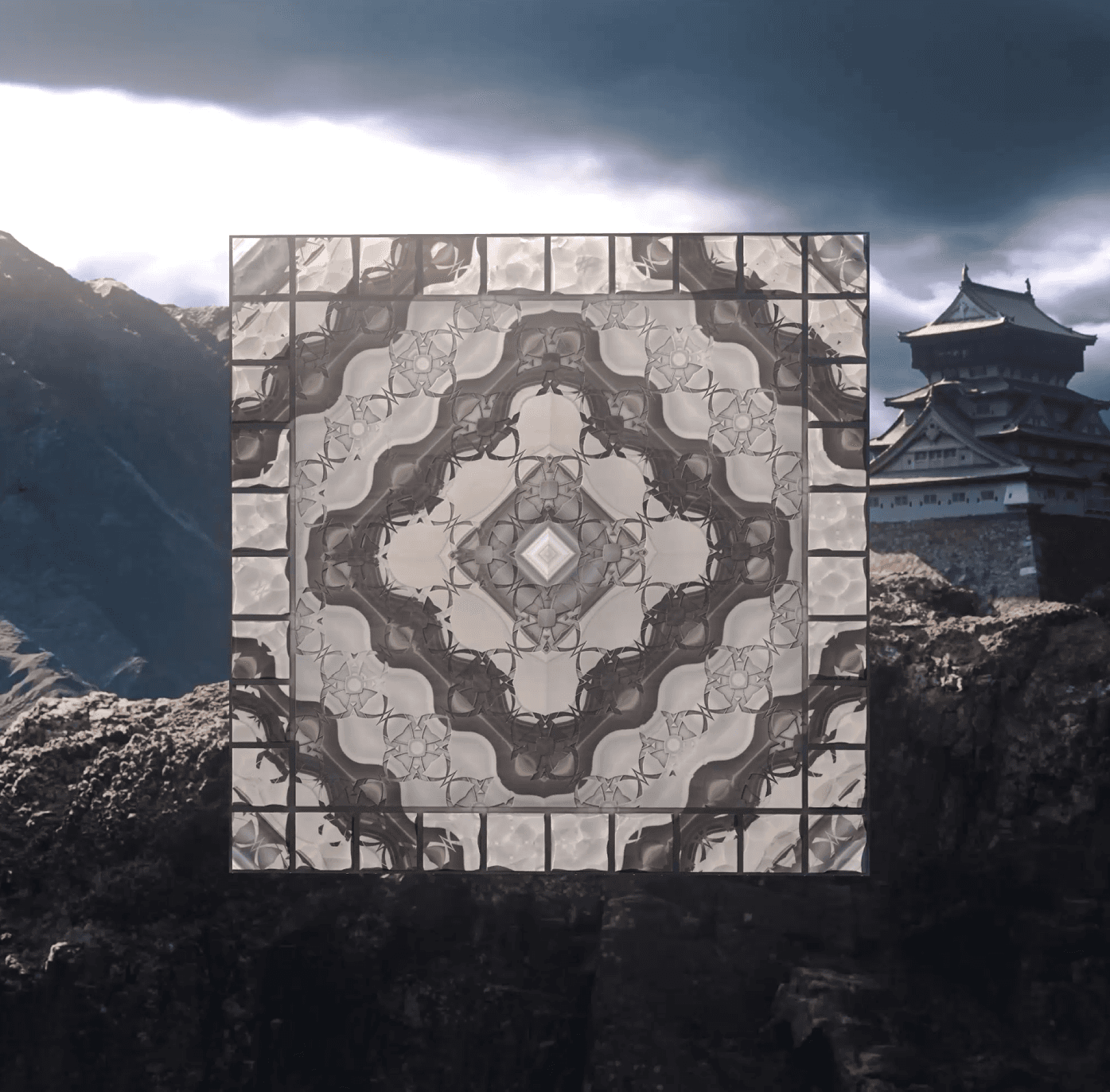
The objective of this project was to design a tile material that captures the passage of time, something that feels old, used, but still beautiful. I wanted to recreate the look of historic floors, the kind you’d find in old castles or traditional buildings, where the tiles are cracked, uneven, and slightly faded by age.
The main goal was to make a material that feels real and lived-in, one that tells a story through its imperfections, scratches, dust, missing pieces, and variations in color.
INITIAL IDEA AND INTENT :
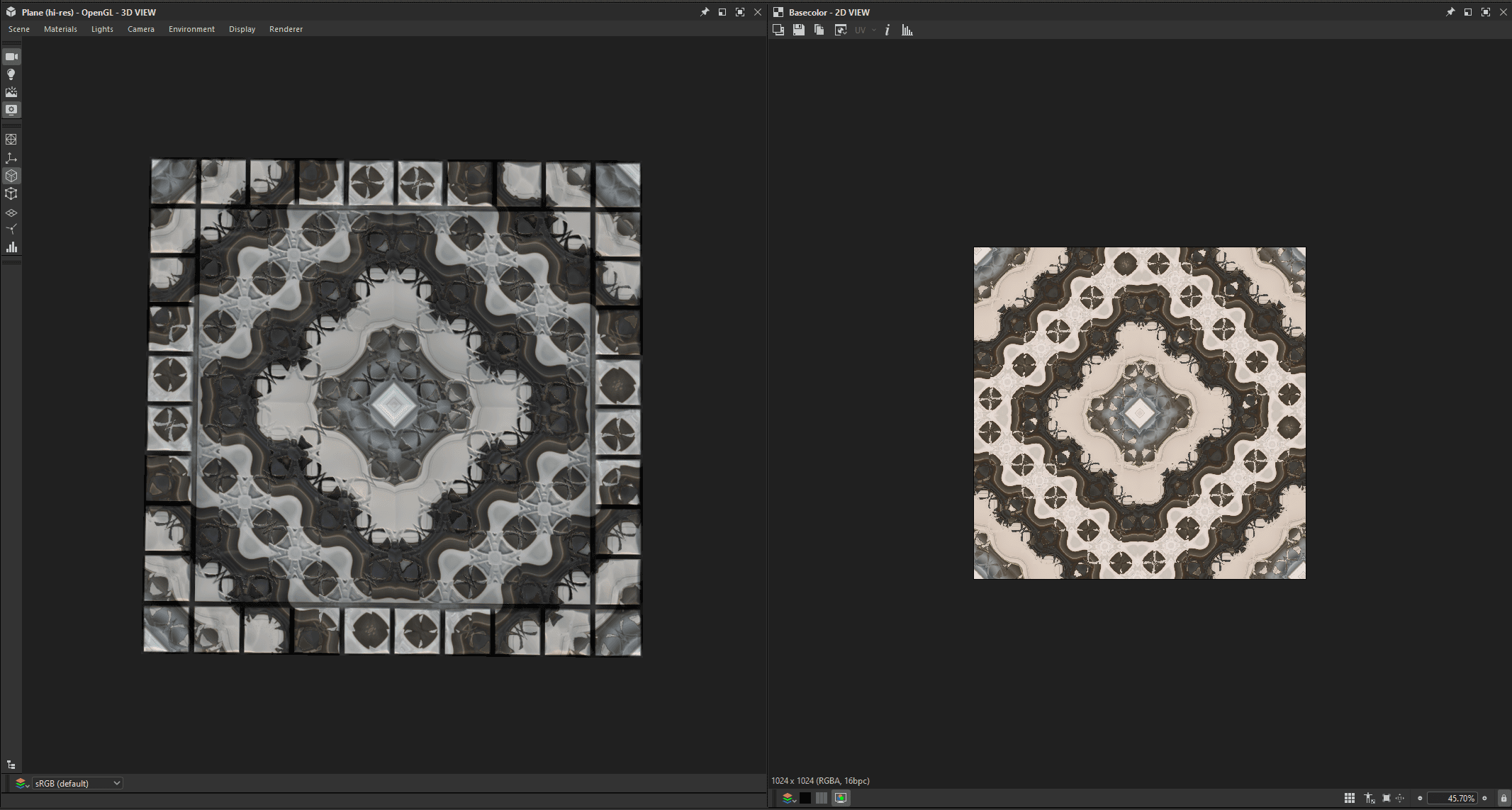
At the start, my idea was to mix influences from medieval European floors and Persian-inspired ceramic mosaics. Both styles have strong patterns and a lot of character, so I wanted to keep that decorative quality while showing clear signs of deterioration.
The intent was to balance elegance and decay, a surface that once looked pristine but has slowly broken down over time. I wanted the viewer to almost imagine where this floor might be: a forgotten hallway, an old temple, or a ruined courtyard.
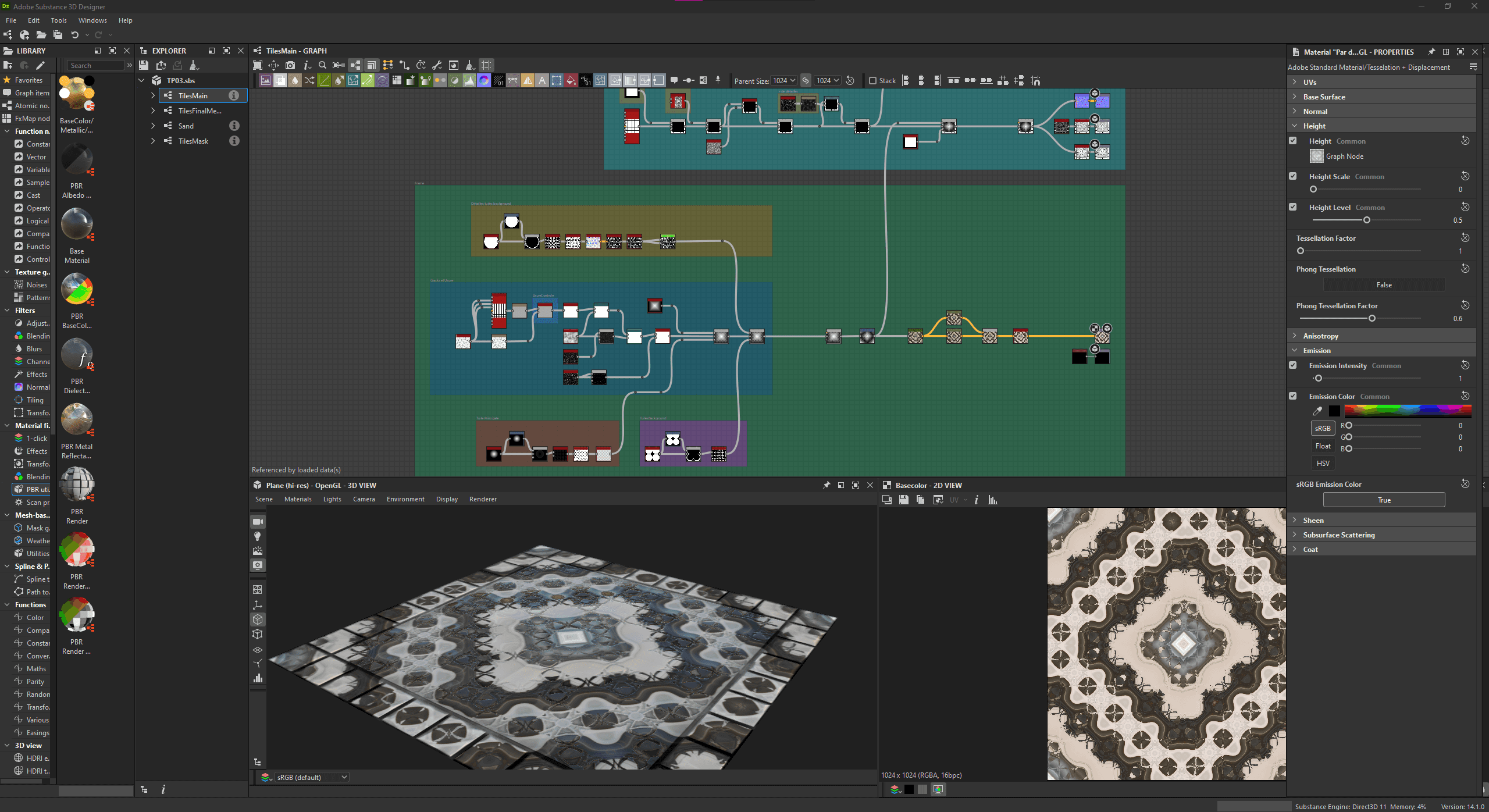
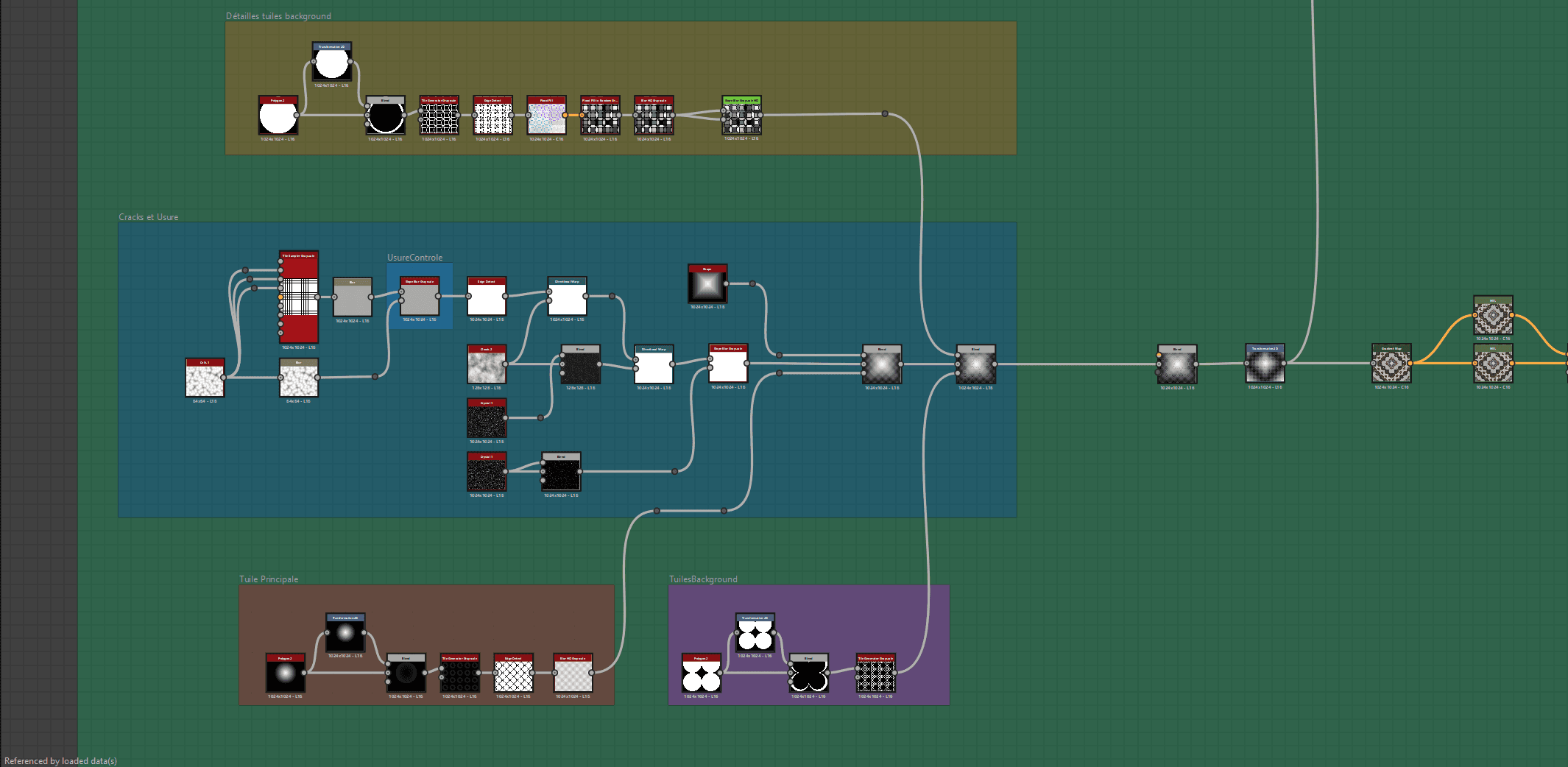
From a technical point of view, my plan was to create a procedural material where the user could control the level of damage: from slightly worn tiles to heavily fractured and displaced ones, revealing the rubble or dirt underneath.
CHALLENGE :
One of the biggest challenges was making the degradation look organic. Procedural tools can easily produce repetitive patterns or symmetrical damage that doesn’t feel natural. Real surfaces are full of randomness, some tiles chip more than others, colors fade unevenly, and cracks never follow perfect lines.
SOLUTION :
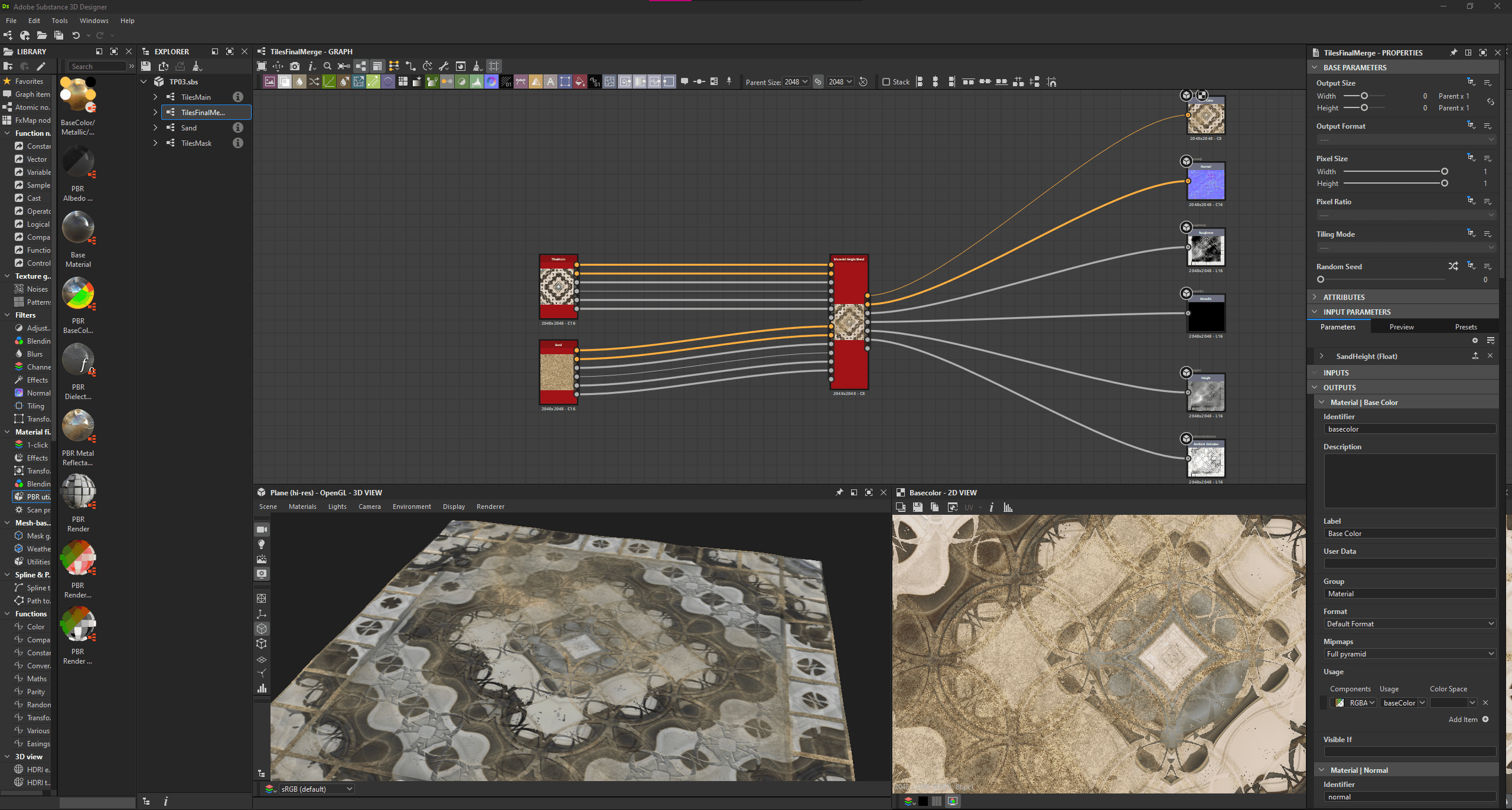
To solve this, I added multiple layers of variation in the height map, color, and roughness. I mixed manual masks with procedural noise to break the symmetry, and used randomized displacement and edge wear to simulate cracked or lifted tiles.
Color desaturation was also key, slightly dulling the greens and reds helped sell the aged look. Finally, small details like dust buildup in the grout lines and subtle cracks in the enamel made the material feel more believable.
In the end, the result feels like a floor that has survived through centuries, with enough visual richness to tell its own story.
More Projects


Material Design
Tile Material
The goal of this project is to create a flooring/tile material that must be degradable using the tools and settings in Substance Designer.
Year :
2025
Industry :
Video Games
Client :
Collège de Bois-de-Boulogne
Project Duration :
5 weeks
OBJECTIVE :
The objective of this project was to design a tile material that captures the passage of time, something that feels old, used, but still beautiful. I wanted to recreate the look of historic floors, the kind you’d find in old castles or traditional buildings, where the tiles are cracked, uneven, and slightly faded by age.
The main goal was to make a material that feels real and lived-in, one that tells a story through its imperfections, scratches, dust, missing pieces, and variations in color.
INITIAL IDEA AND INTENT :
At the start, my idea was to mix influences from medieval European floors and Persian-inspired ceramic mosaics. Both styles have strong patterns and a lot of character, so I wanted to keep that decorative quality while showing clear signs of deterioration.
The intent was to balance elegance and decay, a surface that once looked pristine but has slowly broken down over time. I wanted the viewer to almost imagine where this floor might be: a forgotten hallway, an old temple, or a ruined courtyard.
From a technical point of view, my plan was to create a procedural material where the user could control the level of damage: from slightly worn tiles to heavily fractured and displaced ones, revealing the rubble or dirt underneath.
CHALLENGE :
One of the biggest challenges was making the degradation look organic. Procedural tools can easily produce repetitive patterns or symmetrical damage that doesn’t feel natural. Real surfaces are full of randomness, some tiles chip more than others, colors fade unevenly, and cracks never follow perfect lines.
SOLUTION :
To solve this, I added multiple layers of variation in the height map, color, and roughness. I mixed manual masks with procedural noise to break the symmetry, and used randomized displacement and edge wear to simulate cracked or lifted tiles.
Color desaturation was also key, slightly dulling the greens and reds helped sell the aged look. Finally, small details like dust buildup in the grout lines and subtle cracks in the enamel made the material feel more believable.
In the end, the result feels like a floor that has survived through centuries, with enough visual richness to tell its own story.
More Projects
Material Design
Tile Material
The goal of this project is to create a flooring/tile material that must be degradable using the tools and settings in Substance Designer.
Year :
2025
Industry :
Video Games
Client :
Collège de Bois-de-Boulogne
Project Duration :
5 weeks
OBJECTIVE :
The objective of this project was to design a tile material that captures the passage of time, something that feels old, used, but still beautiful. I wanted to recreate the look of historic floors, the kind you’d find in old castles or traditional buildings, where the tiles are cracked, uneven, and slightly faded by age.
The main goal was to make a material that feels real and lived-in, one that tells a story through its imperfections, scratches, dust, missing pieces, and variations in color.
INITIAL IDEA AND INTENT :
At the start, my idea was to mix influences from medieval European floors and Persian-inspired ceramic mosaics. Both styles have strong patterns and a lot of character, so I wanted to keep that decorative quality while showing clear signs of deterioration.
The intent was to balance elegance and decay, a surface that once looked pristine but has slowly broken down over time. I wanted the viewer to almost imagine where this floor might be: a forgotten hallway, an old temple, or a ruined courtyard.
From a technical point of view, my plan was to create a procedural material where the user could control the level of damage: from slightly worn tiles to heavily fractured and displaced ones, revealing the rubble or dirt underneath.
CHALLENGE :
One of the biggest challenges was making the degradation look organic. Procedural tools can easily produce repetitive patterns or symmetrical damage that doesn’t feel natural. Real surfaces are full of randomness, some tiles chip more than others, colors fade unevenly, and cracks never follow perfect lines.
SOLUTION :
To solve this, I added multiple layers of variation in the height map, color, and roughness. I mixed manual masks with procedural noise to break the symmetry, and used randomized displacement and edge wear to simulate cracked or lifted tiles.
Color desaturation was also key, slightly dulling the greens and reds helped sell the aged look. Finally, small details like dust buildup in the grout lines and subtle cracks in the enamel made the material feel more believable.
In the end, the result feels like a floor that has survived through centuries, with enough visual richness to tell its own story.